


Articles
Best Areas to Invest in Property on the Costa del Sol: Zone-by-Zone Analysis
The strongest Costa del Sol investment zones in 2026 include Estepona for mid-range appreciation (still under €3,000/m²), Fuengirola for short-term rental cash flow near the airport, Málaga city for urban growth driven by tech-hub expansion, and Marbella’s Golden Mile for luxury capital gains. Entry-level buyers often start in Vélez-Málaga or Rincón de la Victoria under €150,000. Below, each zone is broken down by pricing, realistic yields, and key risks.
Quick Guide: 7 Best Costa del Sol Investment Zones for 2026
Seven zones span a wide range of budgets and strategies for property investment on the Costa del Sol in 2026.
- Nueva Andalucía and Golf Valley: Strongest rental demand in the Marbella orbit with resale liquidity that few inland zones match. Best for you if you want proven capital growth paired with consistent occupancy.
- Estepona Town Centre: Entry prices sit well below Marbella yet appreciation has been climbing steadily as infrastructure catches up. A good fit if you want mid-range coastal exposure without overpaying.
- El Higuerón, Fuengirola: Modern stock, high short-term rental yields, and under 20 minutes to Málaga airport. Ideal when maximum occupancy and nightly rates matter more than prestige.
- La Zagaleta: Two private golf courses, 24-hour gated security, and a helipad signal the tier. Best for you if wealth preservation and total privacy outweigh rental income.
- Soho (Arts District), Málaga City: Urban regeneration and tech-sector growth keep pushing demand, though tightening rental rules require careful license checks. A good fit if you prefer city-centre appreciation over beach lifestyle.
- Rincón de la Victoria: Genuine budget entry under roughly €250,000 with commuter-friendly proximity to Málaga. Ideal when you need an affordable first purchase with room to grow.
- Ojén: Twenty Minutes from Marbella, a Quieter Pace: Countryside pricing a short drive from coastal amenities. Best for you if lifestyle value and land potential matter more than immediate rental yield.
Whatever zone you choose, secure your NIE early, budget 10 to 13 percent for purchase costs, and confirm the municipality’s tourist license status before signing anything — our collection of property guides covers each step in detail.
Estepona and the New Golden Mile: Mid-Range Appreciation West of Marbella
Average asking prices in Estepona’s coastal urbanizations sit around €2,800–€3,500 per m² for new-build apartments in 2026, roughly half what equivalent stock costs ten minutes east on Marbella’s Golden Mile. That gap is closing. Over the past three years, Estepona’s town centre and beachfront zones have seen price growth that outpaces most mid-range corridors on the Costa del Sol, driven by a wave of boutique developments and a municipality that actively issues tourist rental licenses.
A pattern that consistently separates successful Estepona investments from disappointing ones is timing relative to infrastructure completion. Buyers who purchase during the construction phase of nearby road upgrades or commercial developments tend to capture the steepest appreciation curve, while those who wait until the infrastructure is finished pay prices that already reflect the improvement. The key indicator to watch is municipal planning approvals — once a project moves from “proposed” to “licencia de obra concedida,” the price adjustment in surrounding properties typically follows within six to twelve months.
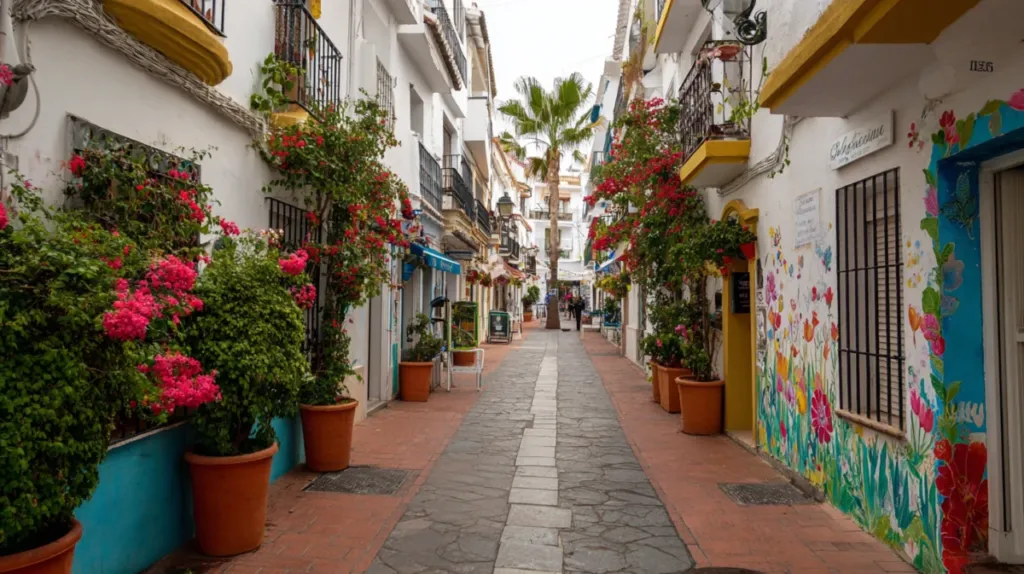
Estepona Town Centre
Walkability sets this micro-zone apart. The old town’s pedestrianized streets, murals, and orchid garden pull steady foot traffic year-round, which translates into strong short-let occupancy for well-located apartments. Expect to pay around €2,500–€3,200 per m² for resale stock and slightly more for the handful of new boutique projects finishing in 2025–2026. Buyers here tend to be lifestyle investors: they want personal use in spring and autumn, rental income in summer. One limitation worth noting is that parking is scarce and street noise carries in older buildings facing the main avenues.
New Golden Mile (Estepona Beachside)
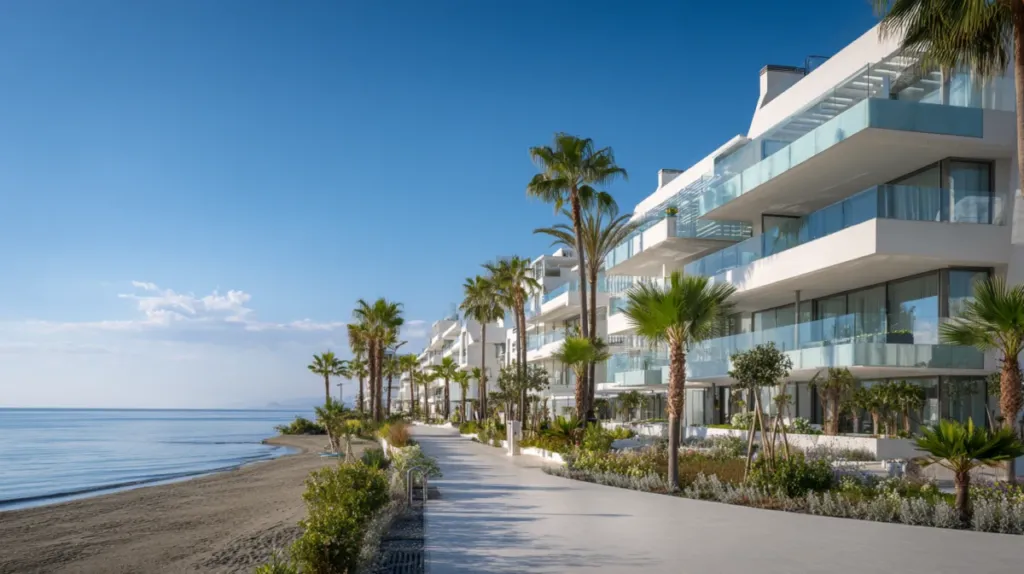
This strip between San Pedro de Alcántara and Estepona port concentrates the largest pipeline of new-build developments on the western coast. Prices for off-plan two- and three-bedroom apartments typically range from €3,000–€4,000 per m², with completion dates stretching into late 2026. The buyer profile skews toward Northern European families seeking a lock-and-leave holiday home with rental upside. Beach access is excellent, but many complexes sit along the busy N-340 or AP-7 corridor, so noise insulation and orientation matter more than brochures suggest.
Cancelada and Atalaya
Sitting slightly inland from the New Golden Mile, these neighbourhoods offer the corridor’s best value per square metre: often €2,200–€2,800 per m² for townhouses and ground-floor apartments with garden. They attract budget-conscious investors who prioritize yield over prestige. Cancelada’s growing commercial strip (supermarkets, international schools nearby) adds practical appeal for long-term tenants. The trade-off is weaker rental demand in winter compared to beachfront zones, since holiday guests rarely choose an address without sea views.
Estepona West (Towards Casares Border)
The stretch approaching Casares is where speculative buyers look for land or semi-detached villas below €2,000 per m². Infrastructure is thinner here, and some plots still lack mains gas, but the municipal plan includes road upgrades expected by 2027. This zone suits patient investors comfortable holding for three to five years before flipping or developing.
If Estepona’s prices have already stretched past your budget, Casares and Manilva sit just a few kilometres further west with entry-level apartments often around €1,500–€1,800 per m², though rental demand drops noticeably outside peak summer months.
Marbella, Nueva Andalucía, and the Golden Mile: Luxury Capital Gains and Premium Rentals
Price per square meter on the Golden Mile sits at roughly €6,000 to €10,000 for resale apartments, with new-build branded residences pushing well past €12,000. That spread tells you something important: Marbella’s premium zones aren’t one market. They’re five or six overlapping micro-markets, each with different buyer profiles, rental realities, and risk levels.
Golden Mile: Brand-Name Addresses, Shrinking Yields
The stretch between Marbella’s old town and Puerto Banús concentrates the highest per-square-meter prices on the entire Costa del Sol. Developments like Design Hills list three-bedroom apartments from around €5,450,000, and Marina de Puente Romano units trade near €3,950,000 for similar configurations. Buyers here pay for walkability to beach clubs, five-star hotels, and name recognition that holds resale value across economic cycles.

Rental yield is the weak spot. Marbella municipality has tightened short-term rental licensing, and many Golden Mile communities now restrict or outright block tourist lets through community statutes. If rental income matters to your investment case, verify the community’s rental policy before signing anything. Capital appreciation has been strong through 2024 into early 2026, but entry prices already bake in years of future growth.
One detail that often determines whether a Golden Mile purchase performs well or underperforms is the community of owners (comunidad de propietarios) and its voting history on rental restrictions. Buildings that have already voted to block tourist lets rarely reverse that decision, while buildings that haven’t yet voted face the risk of a future ban. Requesting the minutes from the last three annual general meetings before making an offer reveals this trajectory far more reliably than any agent’s assurance.
Nueva Andalucía and Golf Valley
Golf Valley remains the most liquid resale market in the Marbella area. Six-bedroom villas here can reach €11,950,000, yet the real volume sits in the €800,000 to €2,500,000 bracket: renovated apartments and smaller villas that attract golf-season tenants from October through May. That winter rental demand is what separates Nueva Andalucía from beach-focused zones where occupancy craters outside July and August.

An apartment at Magna Marbella, for instance, lists at around €820,000 for two bedrooms. That’s a realistic entry point for investors who want Marbella’s postcode without Golden Mile pricing. Expect per-square-meter costs of roughly €4,000 to €6,500 depending on proximity to the golf courses and build quality.
Puerto Banús Fringe
Properties one or two streets back from Puerto Banús harbor trade at a noticeable discount compared to frontline marina addresses. The trade-off: noise from nightlife venues can be significant in summer, and some older blocks need substantial renovation. Investors who buy smartly here and refurbish tend to see strong short-term rental demand from the marina crowd, but only where a valid tourist license exists.
Sierra Blanca: Quiet Capital Preservation
Sierra Blanca sits above Marbella’s Golden Mile, gated and residential. Prices per square meter often match or exceed Golden Mile levels, yet rental demand is thin because the area attracts owner-occupiers who value privacy over footfall. This is a wealth-preservation play, not an income play. If you need cash flow, look elsewhere.
Marbella East and Marbesa
Marbesa offers something increasingly rare in Marbella: beachside villa plots at prices that don’t require eight figures. A three-bedroom villa here lists around €1,995,000. The neighborhood feels quieter and more residential than the Golden Mile, which appeals to families and long-stay tenants. Per-square-meter prices run roughly €3,500 to €5,500, making it the most accessible Marbella-proper micro-zone for investors who want a foothold without the premium markup of the western strip.
The catch with Marbesa is infrastructure. Restaurants and retail thin out compared to Nueva Andalucía, and resale liquidity is lower because fewer international buyers know the area. Patient investors with a five-year-plus horizon tend to do well here. Anyone expecting a quick flip should stick to Golf Valley where buyer demand is more consistent.
Benahavís and La Zagaleta: Ultra-Premium Privacy and Long-Term Wealth Preservation
Benahavís collects one of the lowest municipal tax rates on the Costa del Sol, a detail that compounds into serious savings on properties valued above €3 million. That fiscal advantage, combined with mountain-backed plots far from tourist traffic, draws UHNW buyers who treat real estate as a store of wealth rather than an income source.
Resale liquidity is the honest trade-off across this entire municipality. Transactions at the €4 million-plus level can take 12 to 24 months to close, sometimes longer if the property sits in a niche community with few comparable sales. Buyers here should plan for a hold period of seven years or more and treat any earlier exit as a bonus, not a baseline expectation.
La Zagaleta
Gated, guarded around the clock, and limited to a fixed number of plots, La Zagaleta functions more like a private estate than a neighborhood. Two golf courses, an equestrian center, and a helipad sit inside the perimeter. Prices per square meter for built villas often land above €6,000/m², and finished properties regularly list north of €8 million. The security infrastructure sets it apart from virtually every other address on the Costa del Sol. Where it falls short is flexibility: community rules restrict short-term rentals, and the buyer pool for resale is deliberately narrow. That exclusivity preserves values but makes quick exits nearly impossible.

El Madroñal
Sitting slightly lower on the hillside than La Zagaleta, El Madroñal offers gated privacy without quite the same price ceiling. A five-bedroom villa here listed at around €9 million represents the top end; entry-level estates start closer to €3 million. Built-area prices tend to range from roughly €3,500 to €5,500/m² depending on plot size and views. The community attracts families who want space, mature gardens, and proximity to international schools in San Pedro and Marbella. Compared to La Zagaleta, resale moves a touch faster because the price band overlaps with a wider buyer segment. Still, expect months on the market rather than weeks.
La Quinta
For buyers who want a Benahavís address at a lower entry point, La Quinta delivers golf-lifestyle amenities and mountain views from around €4 million for a five-bedroom villa. Price per square meter sits roughly between €3,000 and €4,500/m², making it the most accessible of the three. La Quinta also has a more active resale market: properties here turn over more frequently than in El Madroñal or La Zagaleta, partly because the price range attracts both end-users and investors upgrading from Nueva Andalucía. The community feels less fortress-like, which suits buyers who prefer openness over gates. If La Quinta doesn’t fit the brief, a comparable option in the same municipality at a similar price tier often surfaces in Monte Mayor, though inventory there tends to be thinner.
Benahavís works best as a capital-preservation play for international buyers with patient timelines and no dependency on rental income, though owners who want hands-off oversight often benefit from professional property management on the Costa del Sol. The low municipal taxes quietly offset holding costs year after year, but only if you’re prepared to wait for the right exit.
Fuengirola, Benalmádena, and Torremolinos: Highest Short-Term Rental Yields Near the Airport
Málaga airport sits roughly 15 to 25 minutes from all three municipalities, and that single fact shapes everything about the rental math here. Guests arriving on Friday evening budget flights can reach their apartment before dinner. Guests departing Monday morning don’t need to set an alarm at 4 AM. That convenience translates into higher occupancy across shorter booking windows, which is exactly what cash-flow investors want.
Tourist-license rules differ between the three towns, though, and getting this wrong can turn a profitable unit into a liability. Fuengirola and Benalmádena have generally been more open to granting new licenses for apartments that meet habitability and safety requirements, while Torremolinos has periodically tightened restrictions in its most saturated beachfront zones. Always confirm current license availability with the local town hall before committing to a purchase, because Andalucía’s regional regulations keep evolving.
Seasonality risk deserves more attention than most yield calculators give it. Properties in these three municipalities typically generate 55–70% of their annual rental income between June and September. Investors who model returns based on peak-season nightly rates alone often overestimate annual cash flow by 20–30%. A more reliable approach is to calculate projected income using three tiers: peak rates for July–August, shoulder rates at roughly 60% of peak for May–June and September–October, and low-season rates at 35–40% of peak for the remaining months, then stress-test the numbers assuming two to three weeks of vacancy for maintenance and turnover gaps.
El Higuerón, Fuengirola
This hillside development above the coast pulls a different crowd than the typical beach-holiday apartment block. A penthouse here recently listed at about €2 million for three bedrooms, but standard two-bedroom units in the broader El Higuerón area tend to start closer to €350,000 to €500,000 depending on views and finishes. The appeal is a resort-style complex with pools, spa facilities, and restaurants that attract longer-stay guests willing to pay premium nightly rates. Occupancy can dip outside peak summer months more than beachfront spots, because guests without a car feel somewhat isolated from Fuengirola’s town center. That trade-off means higher revenue per booking but fewer total bookings in shoulder season.

Carvajal and Los Boliches, Fuengirola
Two-bedroom apartments near Carvajal beach frequently trade between €200,000 and €320,000, making this one of the most accessible entry points for short-term rental investors on the Costa del Sol. The tenant mix skews heavily toward Northern European families during summer and retired couples from October through April, which smooths out seasonal gaps better than pure party-tourism zones. Los Boliches, slightly east, benefits from a local market atmosphere and direct train access to Málaga. Expect around €12,000 to €18,000 in gross annual rental income on a well-managed two-bedroom, though management fees and community charges eat into that.
Arroyo de la Miel, Benalmádena
Sitting inland from the coast, Arroyo de la Miel offers the lowest entry prices of the three municipalities. Two-bedroom apartments here can start below €180,000. Rental demand comes partly from families visiting Tivoli World and the nearby cable car, partly from budget-conscious tourists who don’t mind a ten-minute drive to the beach. Gross yields on paper look attractive, but the nightly rates are lower than beachfront equivalents, so the math only works if you keep occupancy above roughly 65% across the year. A plot in La Capellanía, Benalmádena’s hillside area, recently listed at €1,000,000 for development, signaling that investors see upside in the municipality’s growth trajectory.
La Carihuela, Torremolinos
This is the old fishing quarter turned tourist hotspot, and it remains one of the most walkable beachfront neighborhoods on the entire Costa del Sol. Two-bedroom apartments typically range from €220,000 to €380,000. The area fills quickly in summer, and its restaurant scene keeps shoulder-season weekends busy. Where it falls short: license saturation in certain buildings means some community associations have voted to block new tourist lets. Verify the building’s statutes before buying, not just the municipal rules. If La Carihuela proves too restricted, the Playamar stretch a few minutes east usually has more license-friendly buildings at similar price points.
- Lowest entry price: Arroyo de la Miel (from around €180,000 for a two-bedroom)
- Highest nightly rates: El Higuerón (resort-style premium)
- Best year-round occupancy: Carvajal and Los Boliches (mixed tourist demographics)
- Strongest walkability and dining scene: La Carihuela (check license availability first)
Málaga City: Urban Regeneration, Tech Growth, and Tightening Rental Rules
Málaga capital banned new short-term rental licenses across much of its historic center in late 2024, and the restriction has only tightened since. That single regulatory shift changed the investment calculus for an entire city. Buyers chasing holiday-let yields now face a hard wall in the most walkable, most desirable neighborhoods. But the same city is also attracting Google, TikTok, and a growing cluster of tech firms that push long-term rental demand well beyond what traditional tourism ever did. The trick is knowing which district rewards which strategy.
Soho (Arts District)
Soho sits just south of the Alameda and has been Málaga’s most visible regeneration story. Street art, gallery conversions, and restaurant openings drove prices from bargain levels to roughly €3,200 to €4,000/m² in the span of a few years. The short-term rental ban covers most of this zone, so the play here is long-term lets aimed at young professionals and remote workers. Monthly rents for a renovated two-bedroom often land between €1,200 and €1,500, which still looks attractive against purchase prices that remain below Marbella levels. Soho’s limitation: supply of unrenovated stock is drying up fast. Finding a project apartment at a reasonable entry price takes patience and local contacts.

What many buyers overlook in Soho is the building’s structural classification. Pre-1970s buildings in this district often carry a “catalogación” status under Málaga’s urban plan, meaning the façade or structural elements cannot be altered during renovation. This limits the scope of interior remodeling and can increase refurbishment costs by 15–25% compared to a non-catalogued building. Checking the PGOU ficha for the specific plot number before purchasing avoids discovering these restrictions mid-renovation when the architect submits plans to the town hall.
Teatinos
This university-adjacent district barely registers with foreign buyers, which is exactly why it deserves attention. The University of Málaga campus and the expanding tech park sit within walking or cycling distance. Prices hover around €2,400 to €3,000/m², making it the cheapest urban entry point with genuine rental demand. Student and young-professional tenants keep occupancy high year-round, and the new metro Line 2 extension (expected to improve connectivity by 2026 or 2027) should compress commute times further. Rental yields here can reach around 5 to 6% gross on modest two-bedroom apartments. The neighborhood lacks charm compared to the center, though, and capital appreciation will be slower than in trendier zones.
Malagueta and East Beach
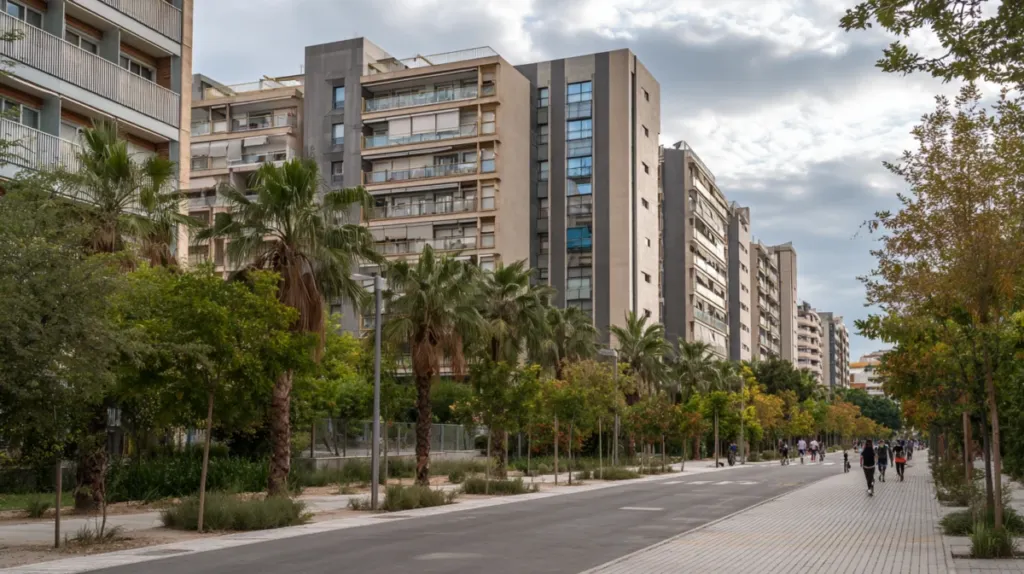
Malagueta stretches along the city’s main beach toward El Palo. Some blocks still qualify for tourist licenses, particularly newer developments east of the bullring. Expect prices closer to €3,800 to €5,000/m² for sea-view apartments. This is the one Málaga district where a mixed strategy (long-term winter lets, short-term summer bookings) can still work legally, provided you verify the specific building’s license status with the Junta de Andalucía registry before signing anything. The risk: municipal rules could extend the ban eastward, which would strand buyers who paid a premium for short-term potential.
La Térmica and West Málaga
The stretch west toward Torremolinos, around La Térmica cultural center, has seen new-build projects targeting the tech-worker demographic. Prices for off-plan apartments sit around €3,000 to €3,800/m², with completion dates running into 2026 and 2027. Long-term rental demand benefits from proximity to the Málaga TechPark and the airport commuter rail. This area won’t deliver the walkable urban lifestyle of Soho, but it offers newer building stock with better energy ratings and lower community fees. Off-plan purchases carry the usual timing risk: construction delays can push your first rental income back by six months or more.
The tech-hub effect is real but unevenly distributed. Companies setting up offices in Málaga bring employees who need 12-month leases, not holiday apartments. That demand concentrates in districts with good transit links and modern housing stock. Investors who bought historic-center flats expecting Airbnb income now face a pivot to long-term lets at lower per-night equivalents, or a sale into a market where the next buyer faces the same restriction.
Eastern Costa del Sol: Rincón de la Victoria, Vélez-Málaga, and Nerja for Budget Entry
Two-bedroom apartments east of Málaga city regularly list for around €120,000 to €170,000, roughly half what equivalent units cost in Fuengirola or Benalmádena. That price gap is the single biggest draw for investors working with limited capital, but it comes with a trade-off that shapes everything else: the AP-7 motorway effectively ends at Rincón de la Victoria. Beyond that point, you’re on the old coastal N-340 or winding mountain roads, and that infrastructure bottleneck directly affects resale speed and buyer pool size.
Rincón de la Victoria
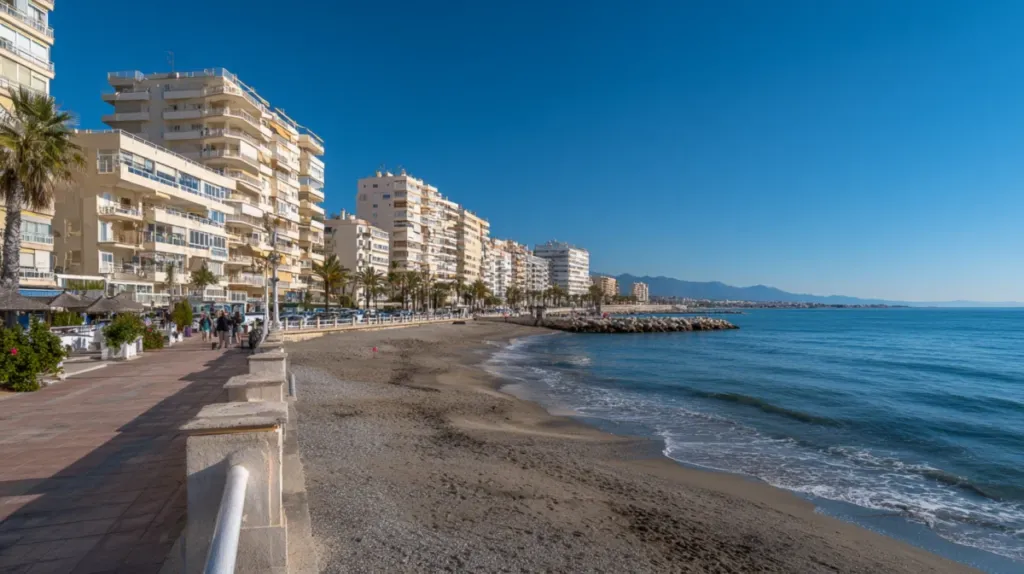
Proximity to Málaga makes Rincón the most liquid market on this eastern stretch. Commuters working in the city’s tech district or university area can reach central Málaga in about 15 minutes by car, and the Cercanías suburban rail extension has been discussed for years, though no confirmed timeline exists as of early 2026. A two-bedroom apartment in the town center or along the Paseo Marítimo typically asks around €140,000 to €180,000. Long-term rental demand stays consistent because Spanish families priced out of Málaga proper settle here. Short-term holiday lets generate less income than coastal towns further west since Rincón lacks the international tourist brand of Nerja or Marbella. If your plan is steady long-term tenants rather than peak-season nightly rates, Rincón is the strongest pick on this corridor.
Vélez-Málaga
Rock-bottom entry prices define Vélez-Málaga. Two-bedroom apartments in the town itself often sit around €80,000 to €130,000, and even the coastal strip of Torre del Mar rarely exceeds €160,000 for a similar unit. Torre del Mar draws a loyal Spanish summer crowd, which means occupancy spikes hard in July and August but drops sharply from October through April. The inland town of Vélez-Málaga itself has limited tourist appeal, so rental income there depends almost entirely on local demand and long-term lets. Resale can be slow. Properties sometimes sit on the market for 12 months or longer because the international buyer pool is thin and financing options for non-residents are less competitive at these price points. Still, the raw numbers work: gross yields on long-term lets in Torre del Mar often land around 6% to 7%, which beats most western Costa del Sol locations.
Nerja
Nerja commands a clear premium over its eastern neighbors because it has something they don’t: genuine international tourism brand recognition. The Balcón de Europa, the Caves of Nerja, and a compact old town with character keep visitor numbers high well beyond peak summer. A two-bedroom apartment in or near the old town typically lists for around €180,000 to €250,000, significantly above Vélez-Málaga but still accessible compared to anything west of Málaga. Short-term rental yields can be strong during spring and autumn shoulder seasons, which is unusual for this part of the coast. The constraint is access. Nerja sits about 50 minutes east of Málaga airport with no motorway connection, and that distance filters out a large segment of impulse buyers. Resale liquidity is better than Vélez-Málaga but noticeably slower than Rincón or any western town with direct AP-7 access.
Budget investors who need the lowest possible entry should focus on Vélez-Málaga, but only with a long-term hold strategy and realistic expectations about resale timelines. Rincón works best for steady rental income tied to Málaga’s job market. Nerja is the premium play on this stretch, justified by tourism demand that most eastern towns simply can’t match.
One factor that budget investors on the eastern coast frequently underestimate is the cost and complexity of property management at a distance. Unlike the western Costa del Sol, where dozens of established management companies compete for business, the eastern stretch has far fewer professional operators. This means higher management fees (often 25–30% of rental income versus 15–20% in Fuengirola or Marbella) and fewer options if the relationship sours. Investors who don’t plan to be physically present at least quarterly should factor this management gap into their yield calculations from the start.
Inland Alternatives: Alhaurín, Coín, and Ojén for Countryside Value
A three-bedroom finca with land in Coín can cost what a studio apartment costs in Marbella. That price gap — significantly less per square meter than equivalent coastal towns — draws buyers who want space over sea views. But inland Costa del Sol property plays by different rules, and treating these towns like cheaper versions of the coast leads to disappointment.
Ojén: Twenty Minutes from Marbella, a Different World
Ojén sits roughly eight kilometers uphill from Marbella, close enough that residents use coastal supermarkets and restaurants regularly. That proximity to the coast makes it the least “inland” of the three options here, and it shows in pricing: expect to pay more per square meter than Coín or Alhaurín, though still well below anything in Nueva Andalucía. The village has attracted a small community of remote workers and creative professionals who want Marbella access without Marbella noise. Renovated townhouses in the village center tend to hold value better than isolated rural plots, partly because Ojén’s charm as a white village generates consistent interest from a niche international buyer pool — and skilled wood carpentry specialists are essential for restoring traditional Andalusian interiors authentically. Resale still moves slowly compared to the coast, often taking six months or longer even for well-priced properties.

Coín: Land, Fincas, and the Long Game
Coín is where you go for acreage. The surrounding countryside offers rustic fincas on plots of 5,000 square meters or more at prices that barely register on the Marbella scale. This is a lifestyle purchase first and an investment second. Rental demand for short-term holiday lets is thin because tourists overwhelmingly prefer beach proximity. Long-term tenants exist but the pool is small, mostly expats and local workers. Where Coín makes financial sense is as a long-hold appreciation play: as coastal prices keep climbing, inland towns with decent road connections gradually absorb spillover demand. The A-355 connects Coín to Marbella in about 30 minutes, which keeps it within commuting range. Just don’t expect to flip a finca in two years for a profit.
Alhaurín el Grande and Alhaurín de la Torre: Two Towns, Two Profiles
These get lumped together but serve different buyers. Alhaurín de la Torre, closer to Málaga airport and practically suburban at this point, has seen steady new-build development and attracts families who work in Málaga city. Prices here have crept up faster than in deeper inland towns, narrowing the coastal discount. Alhaurín el Grande, further into the hills, remains genuinely rural with lower entry prices and larger plots. It suits buyers who want a countryside home they’ll use personally rather than rent out. Neither town generates meaningful short-term rental income. If cash flow matters to you, look back at the coastal sections.
The honest summary for all three inland zones: these work as primary residences, second homes, or very patient investments. Gross rental yields rarely match what coastal apartments deliver, and resale liquidity is noticeably lower. Buyers who thrive here are those who value square meters, privacy, and mountain air over spreadsheet returns.
9 Costly Mistakes Foreign Property Buyers Make on the Costa del Sol
Marbella’s town hall and Fuengirola’s town hall apply different criteria when granting tourist rental licenses, even though both sit within Andalucía’s regional framework. That inconsistency catches foreign investors off guard more often than almost any other regulatory issue on the Costa del Sol. Below are the costliest mistakes, each paired with what it actually costs you in money or time.

- Assuming one tourist-license rule covers the whole coast. Málaga city suspended new licenses in late 2024 for most central zones. Marbella still issues them but requires properties to meet specific energy-efficiency and accessibility standards. Fuengirola’s process differs again, with stricter noise-insulation requirements in certain urbanizations. Buying a property “for Airbnb” without checking the specific municipality’s current rules can leave you with an unlettable asset or fines that often run into thousands of euros.
- Paying the wrong transfer tax on a new build. Resale properties carry ITP (Impuesto de Transmisiones Patrimoniales), currently 7% in Andalucía. New-build purchases from a developer carry IVA at 10% plus roughly 1.5% stamp duty (AJD). Confusing the two doesn’t just create a tax headache; it can delay registration at the Land Registry by months.
- Ignoring non-resident tax obligations after purchase. Non-residents who don’t rent out their property still owe an annual imputed income tax (Modelo 210), calculated on the cadastral value. Miss it for a few years and the accumulated penalties add up fast, sometimes to several thousand euros before you even notice.
- Forgetting plusvalía municipal on sale. This municipal capital-gains tax is based on the increase in land value during your ownership period. Sellers regularly budget for national capital-gains tax but overlook plusvalía entirely, which can represent an unexpected bill of several thousand euros depending on how long you held the property and where it sits.
- Buying without a valid NIE. No NIE (Número de Identidad de Extranjero), no notary deed. Applying from outside Spain can take eight to twelve weeks through a consulate. Starting the purchase process before securing the NIE risks losing a reservation deposit if the timeline slips.
- Skipping due diligence on urbanization legality. Some inland and semi-rural properties sit on land classified as “suelo no urbanizable” or lack a proper first-occupation license (licencia de primera ocupación). Without that license, connecting utilities legally becomes difficult or impossible, and resale value drops sharply. A nota simple from the Land Registry costs under €10 and reveals most red flags within days.
- Underestimating community fees in luxury urbanizations. Gated communities with private security, pools, and landscaped gardens can charge community fees of €3,000 to €6,000 per year or more. In ultra-premium developments, annual fees sometimes exceed €10,000. These fees are legally binding, and unpaid debts attach to the property, not the previous owner.
- Relying on the seller’s energy certificate or survey. Energy performance certificates (CEE) are mandatory, but an outdated or inaccurate one won’t protect you from hidden structural issues. Commissioning an independent survey costs around €300 to €800 depending on property size and saves you from absorbing repair costs that dwarf the survey fee.
- Using a non-specialized lawyer or skipping legal help entirely. General-practice lawyers from your home country rarely understand Andalusian property quirks like the PGOU (urban planning rules) or coastal-zone restrictions under the Ley de Costas. Verified local lawyers and bilingual property managers, findable through platforms like ServiceHero, catch issues that generic legal advice misses. The cost of proper legal counsel typically runs around 1% of the purchase price; the cost of not having it can be the entire investment.
One pattern stands out across all nine mistakes: each one is preventable with about two weeks of preparation and the right local professional. The areas covered in this guide reward buyers who treat due diligence as a first step, not an afterthought.
How We Chose Our Top Investment Areas
Six criteria shaped every zone ranking, weighted by how directly each one affects a foreign buyer’s five-year return.
Price per square meter and recent trajectory came first. Zones where asking prices climbed steadily over three or more years scored higher than those with sudden spikes, which often signal speculative froth rather than genuine demand.
Realistic rental yield split into two tracks: short-term holiday lets (gross yields often around 5% to 8% in coastal zones) and long-term residential contracts (typically lower but more predictable). A zone needed strength in at least one track to qualify.
Tourist-license availability and regulatory stability mattered because a license that can’t be obtained kills a rental strategy before it starts. Municipalities actively restricting new licenses scored lower for short-term investors.
Infrastructure and connectivity covered airport proximity, AP-7 motorway access, and public transport. Properties within 30 minutes of Málaga airport consistently show stronger resale demand from international buyers.
Resale liquidity measured how quickly comparable properties sell. High foreign-buyer demand shortens listing periods and reduces negotiation pressure.
Entry-price accessibility ensured the list wasn’t purely luxury. Each tier needed at least one zone where a first-time investor could enter below roughly €250,000.
Currency exposure is another variable that foreign buyers should layer onto these criteria. British, Scandinavian, and North American investors are effectively making a dual bet: one on the property market and one on the EUR exchange rate. A 10% adverse currency move can wipe out two years of capital appreciation when measured in the buyer’s home currency. Hedging strategies or timing purchases around favorable exchange windows won’t appear in any zone ranking, but they materially affect real returns.
Zones that scored well on four or more criteria earned a recommendation. No single factor overrides the others, but weak license prospects or poor connectivity disqualified otherwise attractive areas.
Frequently Asked Questions About Property Investment on the Costa del Sol
Can non-EU citizens buy property in Spain?
Yes. Spain places no nationality restrictions on property purchases. You need a NIE (foreigner identification number) and a Spanish bank account, but citizenship or EU residency isn’t required. Non-EU buyers investing at least €500,000 can also apply for a Golden Visa, though the program’s future terms may change.
What are the total purchase costs on top of the property price?
Expect roughly 10–13% extra for a resale property, covering transfer tax (7% in Andalucía), notary fees, land registry, and legal costs. New-build purchases carry 10% VAT plus around 1.5% in stamp duty. Budget about 1% separately for a specialized local lawyer.
Is Airbnb legal everywhere on the Costa del Sol?
Not uniformly. Each municipality sets its own rules, and Andalucía requires a registered tourist rental license (VFT) before listing on any platform. Some areas have frozen new license applications or imposed zoning restrictions. Operating without a valid license risks fines starting around €2,000, so check your specific municipality’s status before buying.
How do I get a tourist rental license in Andalucía?
You file a declaración responsable with the Junta de Andalucía’s tourism registry, confirming the property meets minimum habitability and safety standards. Processing typically takes a few weeks once documentation is complete. The property must have a first-occupation license and an energy performance certificate. Some municipalities impose additional local requirements or moratoriums.
What rental yield can I realistically expect on the Costa del Sol?
Short-term holiday rentals in well-located areas with valid licenses tend to produce gross yields of around 5–8%, depending on occupancy and season. Long-term rentals sit lower, typically around 3–5% gross. Coastal towns near Málaga airport generally achieve higher occupancy rates than more remote inland locations.
Do I need a Spanish bank account to buy property?
Technically the law doesn’t mandate one, but in practice you do. Notaries, tax offices, and utility companies all require a Spanish IBAN for direct debits and payment processing. Most banks will open a non-resident account once you present your NIE and passport. Open it early to avoid delays at completion.
How long does the buying process take from offer to keys?
A typical resale purchase takes eight to twelve weeks from accepted offer to signing at the notary. New-build off-plan purchases follow the developer’s construction timeline, which can stretch well beyond a year. Delays usually stem from mortgage approvals, missing documentation, or slow NIE processing, so securing your NIE first shaves weeks off the timeline.
