Choosing the right professional for your air conditioning installation in Spain is the single most important factor for ensuring efficient, safe, and long-lasting performance. To avoid common pitfalls, you must verify credentials, understand the installation process, and ask specific questions about equipment sizing and placement. This guide provides the expert checklists and insights needed to hire a qualified installer and protect your investment.

Choosing an air conditioning installer based on price alone is one of the most expensive mistakes a homeowner can make. While a cheap quote might seem appealing, a poor installation inevitably leads to higher costs down the line through inefficiency, breakdowns, and even safety risks. The quality of the installation is just as critical as the quality of the unit you buy.
Here are the tangible consequences of getting it wrong.
A correctly installed air conditioner runs at its peak manufacturer-rated efficiency. An improper installation can slash that efficiency by up to 30%.
Common errors include incorrect refrigerant charging, leaky ductwork, or poor placement of the indoor or outdoor unit. For example, if the outdoor unit is placed in direct sunlight without proper ventilation, it has to work much harder to dissipate heat, driving up your electricity consumption every month. In practice, this means you pay for high performance but only get a fraction of it, directly impacting your utility bills.
Air conditioning systems are designed with components that work in harmony. A poor installation puts immense stress on critical parts like the compressor, which is the heart of the system. Incorrect wiring can cause electrical shorts, and improperly sealed refrigerant lines can lead to leaks that damage the compressor over time.
Instead of lasting the expected 15-20 years, a poorly installed unit may fail in as little as 5-7 years, forcing you into a costly replacement far sooner than anticipated.
Nearly all air conditioning manufacturers stipulate that their units must be installed by a licensed and certified professional for the warranty to be valid. Hiring an unqualified handyman or attempting a DIY installation will almost certainly void your warranty, leaving you with no recourse under standard manufacturer terms or Spanish consumer rights. If a major component fails—a repair that could cost hundreds or even thousands of euros—you will be responsible for the full cost, even if the unit is brand new.
This is not something to take lightly. A faulty air conditioning installation can create genuine dangers in your home.
A professional installer understands the local codes and safety standards in Spain, ensuring your system is not only effective but also completely safe for your family.
Key Takeaways: The Risks of a Poor Installation
Identifying a top-tier installer goes beyond finding someone who can simply connect a few pipes. You are looking for a professional who guarantees efficiency, safety, and longevity for your system. A great installation is invisible; a bad one creates problems for years.

In Spain, anyone handling refrigerant gases must be legally certified. This is not just a recommendation; it’s a legal requirement under the RITE (Reglamento de Instalaciones Térmicas en los Edificios) regulations.
A qualified professional will be registered as an empresa instaladora autorizada (authorised installation company). They should be able to provide their registration number without hesitation. Hiring an uncertified individual is not only illegal but also voids your unit’s warranty and puts your home at risk. This certification ensures they are trained in handling refrigerants safely and installing systems according to national standards.
Air conditioning installation isn’t a one-size-fits-all skill. The expertise required to install a simple single-split unit is different from what’s needed for a multi-split or a complex ducted system.
Look for an installer with a portfolio or references demonstrating experience with projects similar to yours. Ask them directly: “How many ducted systems have you installed in apartments like this one?” A general handyman or a plumber who occasionally installs AC units rarely has the specialised tools or in-depth knowledge to optimise performance and prevent common issues like improper drainage or refrigerant leaks.
A vague, single-figure quote is a significant red flag. A professional installer provides a detailed, written estimate that breaks down all costs clearly. This demonstrates transparency and helps you understand exactly what you are paying for.
Your quote should itemise:
This level of detail prevents surprise costs and allows for fair comparison between different providers.
While online reviews are helpful, learn to read them critically. Look for recent reviews that mention specific positive traits: punctuality, cleanliness during the job, clear communication, and effective problem-solving. A five-star rating is good, but a detailed comment explaining why the service was excellent is far more valuable. Don’t be afraid to ask an installer for direct references from previous clients, especially for larger or more complex air conditioning installation projects.
Installer Quality Checklist:
Use this quick checklist to evaluate potential installers:
Expert Tip: Schedule your air conditioning installation in Spain during the “shoulder seasons” (spring or autumn). Installers are less busy, which can lead to more flexible scheduling and potentially better pricing compared to the summer rush when demand is at its peak.
A professional air conditioning installation is a structured process, not a chaotic day of drilling and wiring. Understanding the key stages helps you monitor the work and ensure everything is done correctly. While every project is slightly different, a competent installer will follow a clear, predictable workflow.
This is the most critical planning phase. The installer will visit your property to do more than just measure the room. They will assess key factors that influence the type of unit you need and how it should be installed.
Expect them to:
Following this survey, you should receive a detailed, written quote (presupuesto) that itemises all costs, including the unit, materials, and labour. Never proceed based on a verbal estimate.
On the agreed-upon date, the physical installation begins. A professional team will work efficiently to minimise disruption.
The core tasks include:
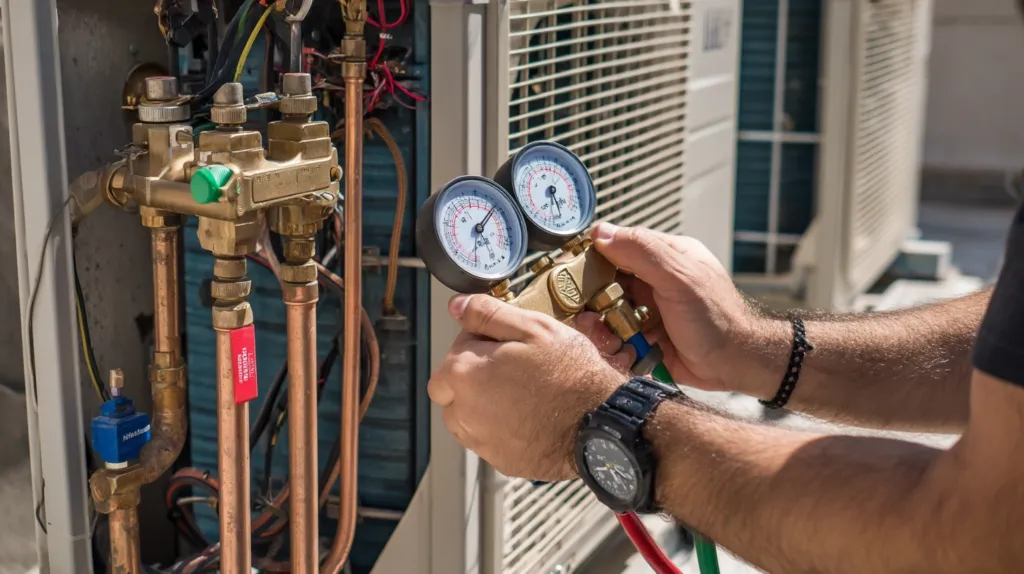
This is where technical expertise is essential. The installer cannot simply turn the system on. First, they must commission it properly. This involves using a vacuum pump to remove all air and moisture from the refrigerant lines—a step that is vital for the system’s efficiency and lifespan.
Once the lines are purged, the correct amount of refrigerant is released into the system. The installer will then power on the unit and perform a series of tests to confirm:

Before the job is considered complete, the installer should walk you through the system’s operation. This includes explaining the remote control’s functions, how to clean the filters, and what routine maintenance is required.
You should also receive all necessary paperwork, including the manufacturer’s warranty for the unit and an official installation certificate (boletín de instalación), which is your proof of a compliant air conditioning installation in Spain.
Use this checklist to track the key milestones of your installation project.
Arming yourself with the right questions is the most effective way to vet a professional and avoid costly surprises. A reputable installer will welcome detailed questions and provide clear, confident answers. Treat your initial conversation as an interview; you are hiring them for a critical job in your home.
These questions confirm the installer is operating legally and that you are protected. This is non-negotiable.
You need to know they have the right skills for your specific system and property.
Clarity on cost is crucial. Your goal is to ensure the presupuesto (quote) is final and all-inclusive.
Managing expectations about the work itself will lead to a smoother process.
Your relationship with the installer doesn’t end when they leave. Ensure you have long-term protection.
Use this summary when you’re on the phone or meeting with an installer:
After you’ve asked the initial questions, the next step is to independently verify the installer’s claims. This is not about distrust; it’s about due diligence. A true professional will expect and welcome this scrutiny.
In Spain, any legitimate company performing an air conditioning installation must be registered as an empresa instaladora autorizada. This is non-negotiable. Ask for their official registration number, which you can often verify with your region’s industrial authority (Industria).
Equally important is the F-Gas certification. This is a legal requirement across the EU for any technician handling the refrigerant gases found in air conditioning units. Hiring someone without this certification is not only illegal but also voids your equipment warranty and poses a significant safety risk. Ensure the specific technician working on your property holds this credential, not just the company owner.
A portfolio of photos is a good start, but speaking directly with past clients provides invaluable insight. A confident installer should have no problem providing contact details for two or three recent customers.
When you call a reference, go beyond a simple “Were you happy?” Ask targeted questions:
Try to get a reference for a project similar to yours. If you live in an apartment, a reference from a large villa owner is less relevant to the logistical challenges your installation might face.
Reviewing past projects helps you gauge the quality and scale of their work. Look for neat pipework, clean wiring, and well-placed outdoor units.
Most importantly, ensure their experience matches your specific needs. Installing a single split unit is fundamentally different from designing and fitting a complex multi-split or ducted system. If you need a ducted system, ask to see examples of precisely that. A vague answer like “We do all types of air conditioning” is a red flag. A better response is, “Yes, last month we completed a ducted installation for a three-bedroom apartment in Marbella. Here are the photos and the client’s contact details.”
Use this list to confirm an installer’s competence before signing any contract.
When you receive a quote, or presupuesto, for an air conditioning installation in Spain, it’s crucial to understand that the price reflects a package of goods and services. The total cost is rarely just the price of the unit itself. A professional quote will break down these elements, but knowing what to look for helps you compare offers effectively and avoid hidden fees.
This is typically the largest single component of the cost. The price varies significantly based on the type, brand, energy efficiency (SEER rating), and cooling capacity (measured in frigories or kW).
Labour is the second major cost factor. Most installers in Spain charge a fixed fee for a standard installation rather than an hourly rate. A standard “back-to-back” installation (where the indoor and outdoor units are placed on opposite sides of the same wall) is the simplest and cheapest.
Factors that increase labour costs include:
hacer una roza) is a time-consuming task that adds significant cost.For a standard split system, expect labour to be in the range of €250 to €450, depending on the region and complexity.
A professional installation requires more than just the AC unit. These material costs are often bundled into the labour fee but should be considered.
Canaleta): Plastic casing to neatly hide the pipes and wires on the wall surface.Soportes): To securely mount the outdoor unit.Certain situations can add to the final bill. Always ask your potential installer about these possibilities.
boletín eléctrico.Licencia de Obra Menor): While not always required for a simple split system, some municipalities or community associations (comunidad de propietarios) demand a minor works permit, especially if the outdoor unit is visible from the street.Cost Component Checklist
Use this list to review any quote you receive:
You’ve done the research and are close to a decision. To ensure a smooth process, be aware of these common pitfalls that can turn a straightforward air conditioning installation into a costly headache, especially in Spain where regulations are specific. Avoiding these errors is just as important as finding a qualified professional.

A quote that is significantly lower than all others should be a red flag, not a reason to celebrate. While everyone wants a good deal, an unusually low price often indicates that corners are being cut. This could mean the installer is using substandard materials, is not properly certified (lacking the mandatory F-Gas certification), or intends to add “unexpected” costs later on. A professional installation has fixed costs for labor and quality materials; a price that ignores this reality is a risk you shouldn’t take.
Never proceed with an air conditioning installation based on a verbal quote or a simple, one-line price on a piece of paper. A professional quote is a detailed document. The mistake is failing to demand this level of detail. Your quote must clearly itemize:
soportes (brackets), and canaleta (trunking).boletín eléctrico.Without a detailed written scope, you have no protection against price hikes or disputes about what was included in the job.
Many homeowners assume the warranty is straightforward, but there are two distinct parts: the manufacturer’s warranty on the unit itself and the installer’s guarantee on their workmanship. The common error is not clarifying both. Ask these specific questions:
Getting clear, written answers to these questions prevents future disputes and ensures you know who to call if a problem arises.
Even with a great quote and a good feeling, don’t skip the final checks. This involves more than just asking for one or two references. Look for independent, recent reviews online. The key is to look for patterns in feedback. One negative review could be an outlier, but if multiple clients mention the same issue—such as poor communication, leaving a mess, or unexpected charges—take it seriously. A company’s reputation is built over many jobs, and a few minutes of research can save you from a poor experience.
Before you sign any contract, run through this quick checklist to ensure you’ve avoided the most common mistakes:
A standard single-unit air conditioning installation in Spain usually takes 3 to 5 hours. Complex multi-unit or ducted systems may require a full day or more, depending on the complexity of the job and the property layout.
The installation workmanship warranty in Spain typically ranges from 6 months to 2 years, provided by the installer. This is separate from the manufacturer’s warranty on the air conditioning unit itself, which covers parts and defects.
In most Spanish apartment buildings, you must get permission from the community of owners (comunidad de propietarios) to install an external unit on the facade. For detached houses, permission is not typically required unless the property is a protected building.
The most important maintenance task is to clean or replace the air filters every 1-3 months. Additionally, keep the outdoor unit clear of debris and schedule an annual professional service to ensure optimal performance and longevity for your system.
Get in touch with up to 6 companies near you. Free and without obligation.
See ratings and experiences from other customers. 94% of companies receive top reviews.
View skills, certifications and references — all in one place.
Describe your task and let the right companies contact you.
We forward your request to relevant companies. You decide who to talk to.
Compare offers, choose the right provider and get your project completed.